JustREACH works on closing the gap between climate adaptation plans and real-world protection across five European pilots. Deliverable 5.1 outlines our initial key learnings before the co-creation phase of the project. Prepared by our partners at TH!NK E, the report maps out each pilot's context, key stakeholders, decision-making processes and the drivers and barriers shaping implementation on the ground.
The framework
To compare very different places fairly, the report used the Institutional Analysis and Design (IAD) framework, which was developed to study how communities govern common pool resources. Adaptation works differently, since its benefits are largely shared and non excludable, so it behaves more like a public good.
The adapted framework has three parts. Context covers each pilot's biophysical characteristics and community attributes, with climate risks and vulnerabilities as a dedicated component. The governance system brings together the formal and informal rules, the actors involved, the decision situations they face and how they interact. Both feed into the main analytical result, the initial barriers and opportunities, which then go to local stakeholders for validation.
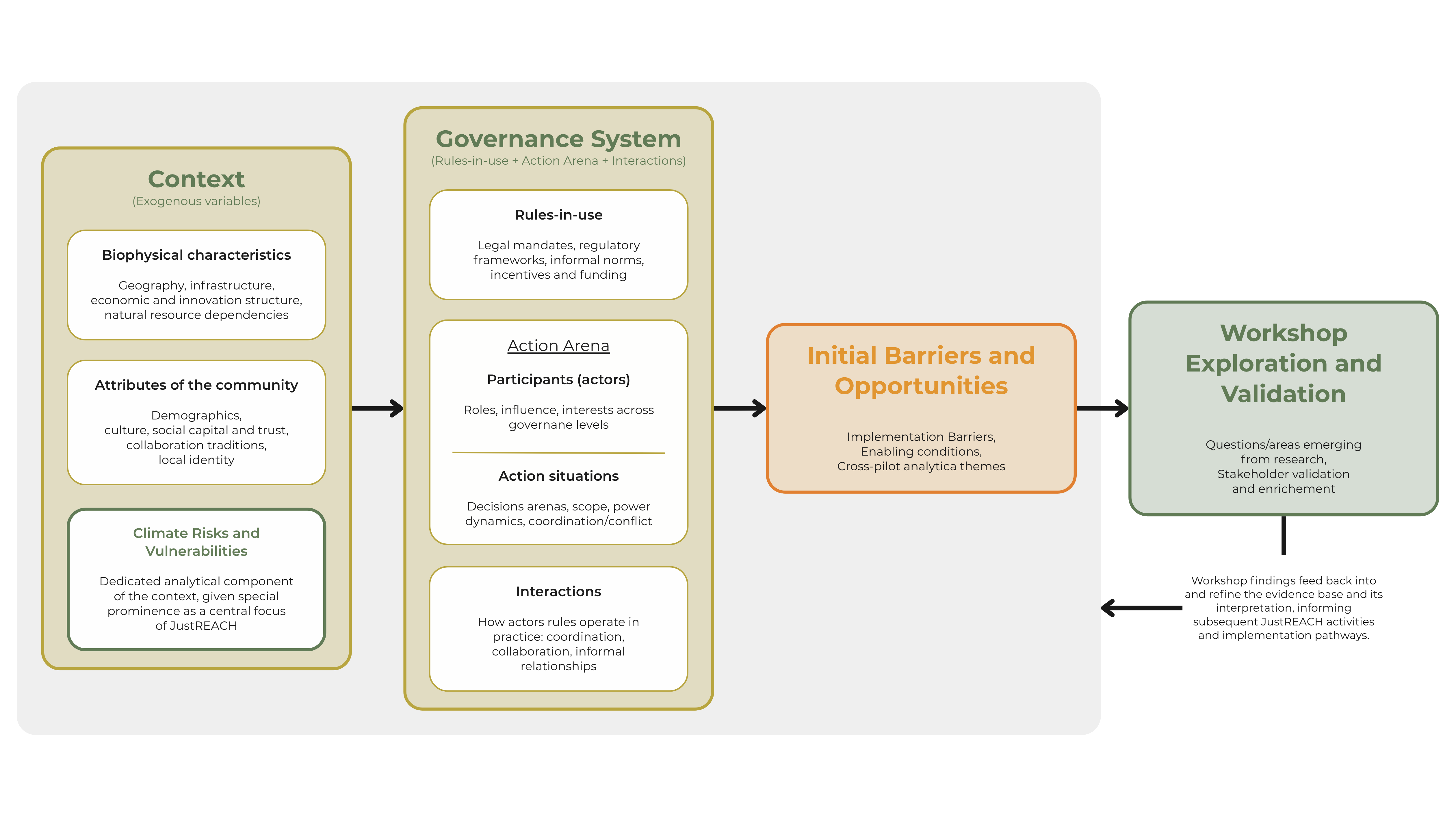
Τhe report builts a set of 128 indicators and filled through desk research, while also mapped stakeholders by influence and interest, held one semi-structured interview per pilot and had partners review everything.
The pilots
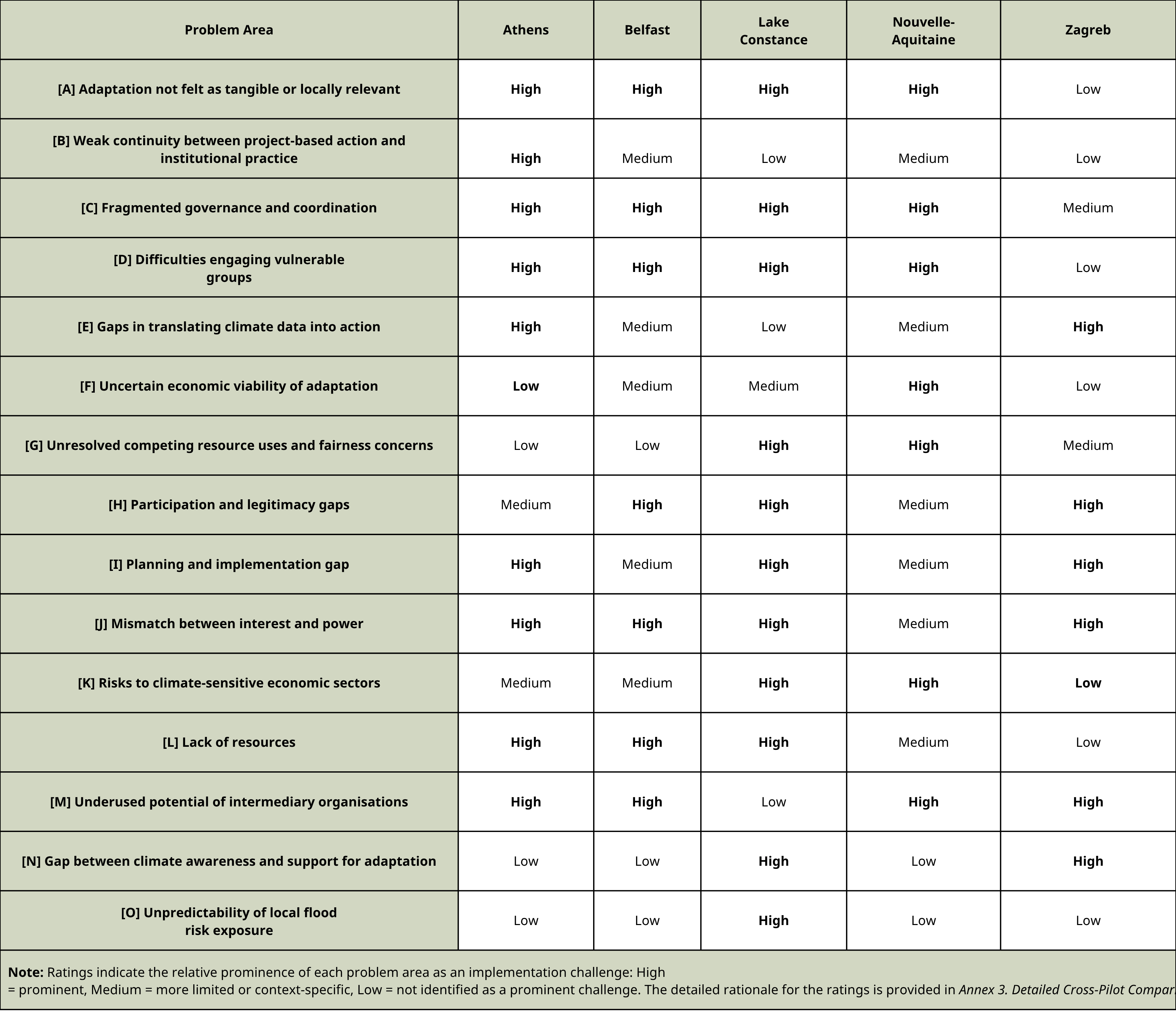
The report segregated theproblem areas that pilots have in common and rated how prominent each is in every pilot. Five were rated high in four of the five sites.
The first is that adaptation often does not feel tangible or locally relevant. People mobilise more easily when it is tied to everyday benefits such as comfort, health or a better neighbourhood. The second is fragmented governance, with responsibilities spread across many levels. The third is the difficulty of engaging the groups most affected, such as older people, low-income households and people in poorly adapted housing. The fourth is a mismatch between interest and power, where those with the most at stake have little say while some highly influential actors engage only weakly. The fifth is the underused potential of intermediary organisations, which could connect authorities, businesses and citizens far more systematically.
The analysis also found real strengths to build on such as the established adaptation strategies, trusted intermediaries, active civil society and flagship initiatives such as Belfast’s Connswater Community Greenway, which links flood resilience with biodiversity, active travel and public health.
These findings were the starting point. Our Just Resilience Mission Workshops are now taking place in all five pilots with the next rounds planned for 2027. Participants first share their own experiences of climate impacts and adaptation and the results will feed further our research.
Read the full report here
Follow us on social media and subscribe to our newsletter to stay updated on the project!